The 7 Best Squarespace Templates for Food Bloggers
This post contains affiliate links. If you purchase through them, I may receive a small commission at no extra cost to you.
Table of Contents Show
What is the best Squarespace template for food blogs?
Quick Answer: The best Squarespace templates for food bloggers are Brower (masonry blog layout built for food content), Stanton (clean editorial hierarchy), and Rivoli (personality-driven food storytelling). Brower is the strongest overall pick because its image-forward blog index makes food photography the main event. All templates are free on every Squarespace plan starting at $16/month.
KEY FACTS:
Squarespace has 150+ templates; roughly 7 have layouts genuinely suited to dedicated food blogging
All templates are included free on every plan (Basic $16/mo, Core $23/mo, Plus $39/mo, Advanced $99/mo on annual billing)
Squarespace does NOT have built-in recipe cards or recipe schema markup; you'll need a third-party plugin like Recipes Generator
A 14-day free trial lets you test any template before committing: try Squarespace free
Template choice affects your starting layout, not your long-term capabilities; every Squarespace 7.1 template shares the same feature set
Food blogging is one of those niches where the template you pick genuinely matters more than average. Your photos are probably doing most of the heavy lifting, your posts tend to be long (recipe instructions aren't short), and readers need to be able to scan and find things quickly. A template that works great for a consultant's website will probably frustrate you within a week.
So let's narrow it down. I combed through Squarespace's full template library and picked the templates that are specifically good options if you’re a food blogger.
(Looking for restaurant website templates instead? That's a different thing entirely; I've got a separate roundup of the best restaurant Squarespace templates. And if you want a broader look at blog templates in general, check out the best Squarespace templates for blogs.)
What Makes a Good Squarespace Template for Food Blogging
Before we get into specific picks, here's what I'm evaluating each template on:
Image-forward homepage layout. Food blogging is visual. Whatever template you choose needs to put photography front and center.
Blog index style. This is how your blog feed displays. Some templates show posts in a list; others use grids or masonry layouts. For food blogs, you want something that shows enough of the featured image to make people want to click.
Long-form post readability. Recipe posts are long. Ingredients, instructions, notes, variations. The body text area needs to handle that gracefully with good spacing and readable typography.
Overall vibe flexibility. You should be able to make this template feel like *your* food blog, whether that's moody and editorial or bright and approachable.
Not on this list as a criteria: how easy it is to add recipe cards. That's a separate (important) thing I'll cover below, and it applies equally to every Squarespace template.
The 7 Best Squarespace Templates for Food Bloggers
1. Brower Squarespace Template
Best for: the all-around food blog pick
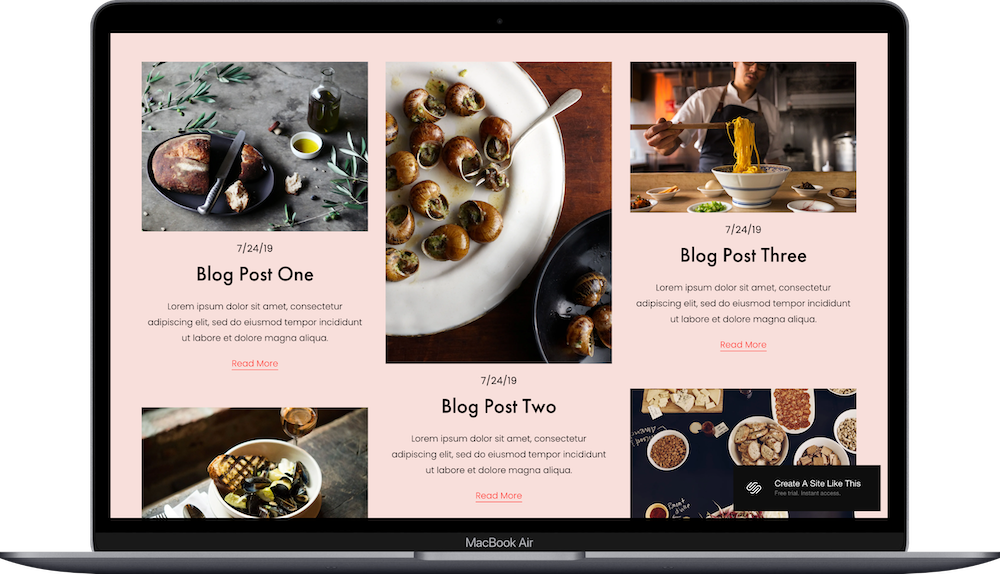
Brower is the template that comes up every time someone asks about food blogging on Squarespace, and for good reason. Its blog index uses a masonry grid layout that lets your food photography take up serious space on the page. Each post thumbnail is large enough to show off the dish, and the staggered grid keeps things visually interesting without feeling chaotic.
The homepage is built around content; it leads with visuals and gives you clean sections for categories, featured posts, and an email signup. For long recipe posts, the single-post layout offers solid readability with generous white space.
If you only look at one template from this list, make it this one. I did a full breakdown of everything it includes in my Brower template review.
2. Stanton Squarespace Template
Best for: Clean, editorial food content
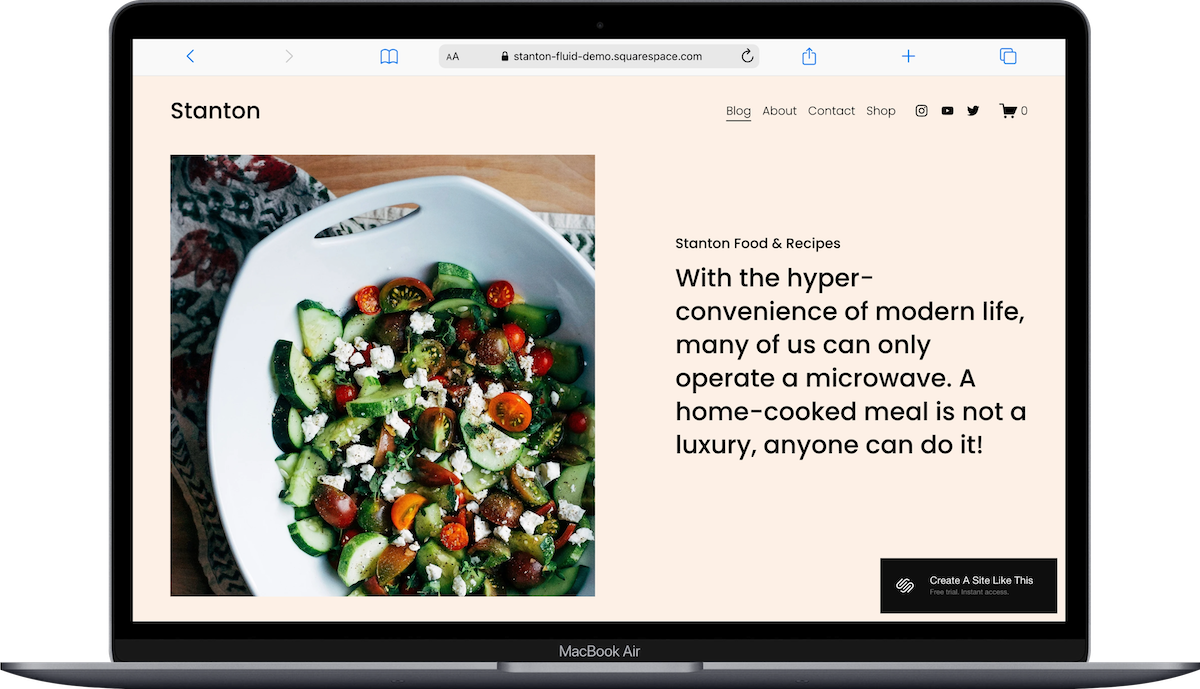
Stanton goes for a more editorial feel than Brower. Think food magazine rather than food diary. The blog layout uses a strong visual hierarchy; featured posts get prominent placement while supporting content fills in around them.
It's a great fit if your food blog leans more toward storytelling, long-form writing, or covering food culture alongside recipes. The typography is intentional and pairs well with high-quality food photography. I covered it in more detail in my Stanton template review.
3. Rivoli Squarespace Template
Best for: Personality-driven food + travel blogs
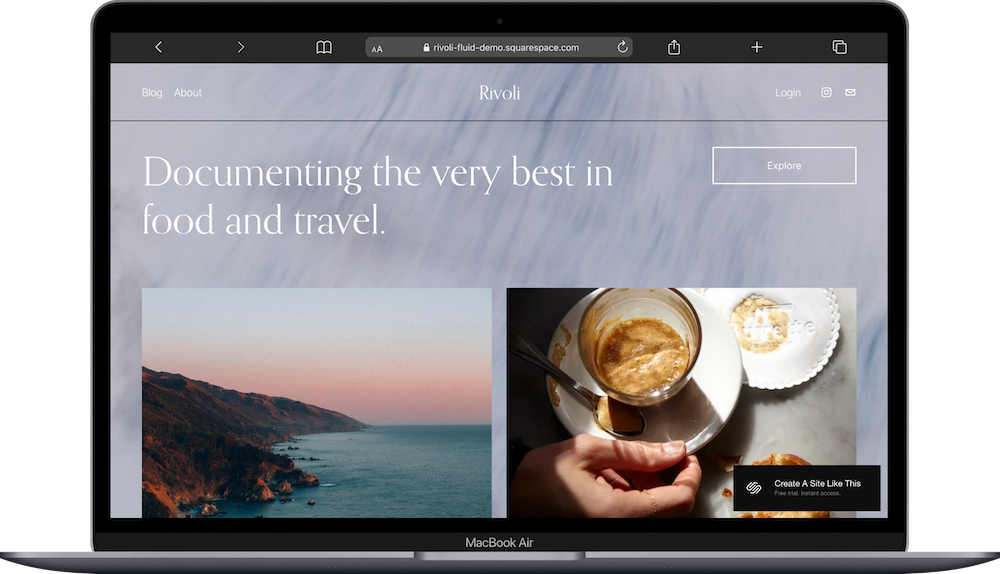
Rivoli is one of those templates that does double duty well. It was designed with a travel/food blog angle, so if your content covers restaurant reviews, food travel, cooking stories, or anything where YOU are as much a part of the brand as the recipes, this is worth a serious look. It’s a little more ‘bland’ IMO than some of the other options, but keep in mind you can customize any template with your own brand colors, fonts, etc.
The layout balances personal narrative with visual content. Your blog index gives posts room to breathe, and the overall structure makes it easy to build out category pages for different content types (recipes vs. restaurant reviews vs. travel guides, for instance).
4. Aue Sobol Squarespace Template
Best for: Food photography and cookbook-style presentation
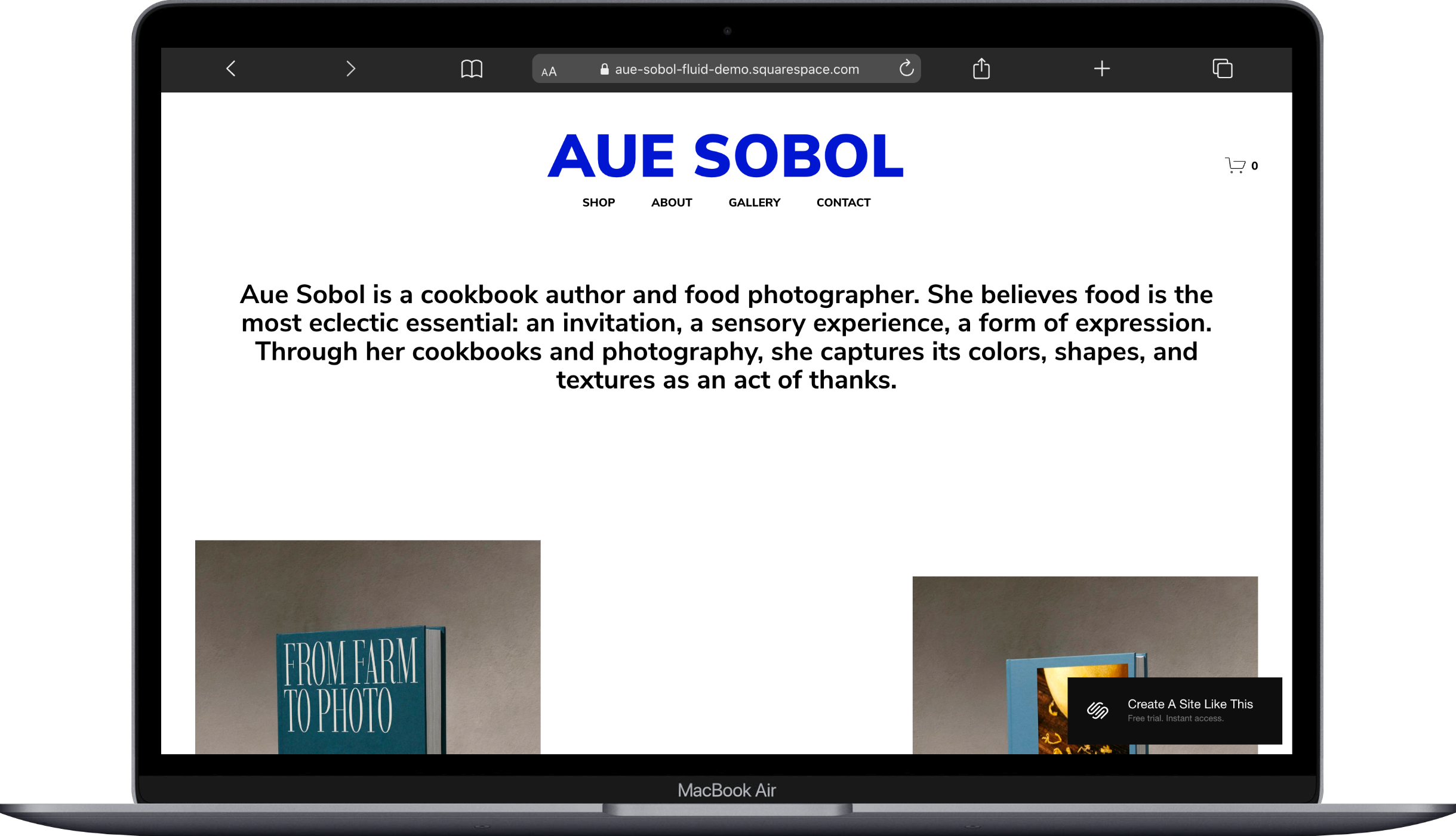
Aue Sobol was built with photographers in mind, and that can translate beautifully to food blogging. If your food photography is your strongest asset, this template gives your images maximum impact.
The layout has a cookbook-quality feel to it. Large hero images, clean content areas, and a portfolio-style approach to organizing content. It's slightly less blog-index-focused than Brower or Stanton, so it works best if you want your site to feel more like a curated collection than a chronological feed. I go deeper on this one in my Aue Sobol template review.
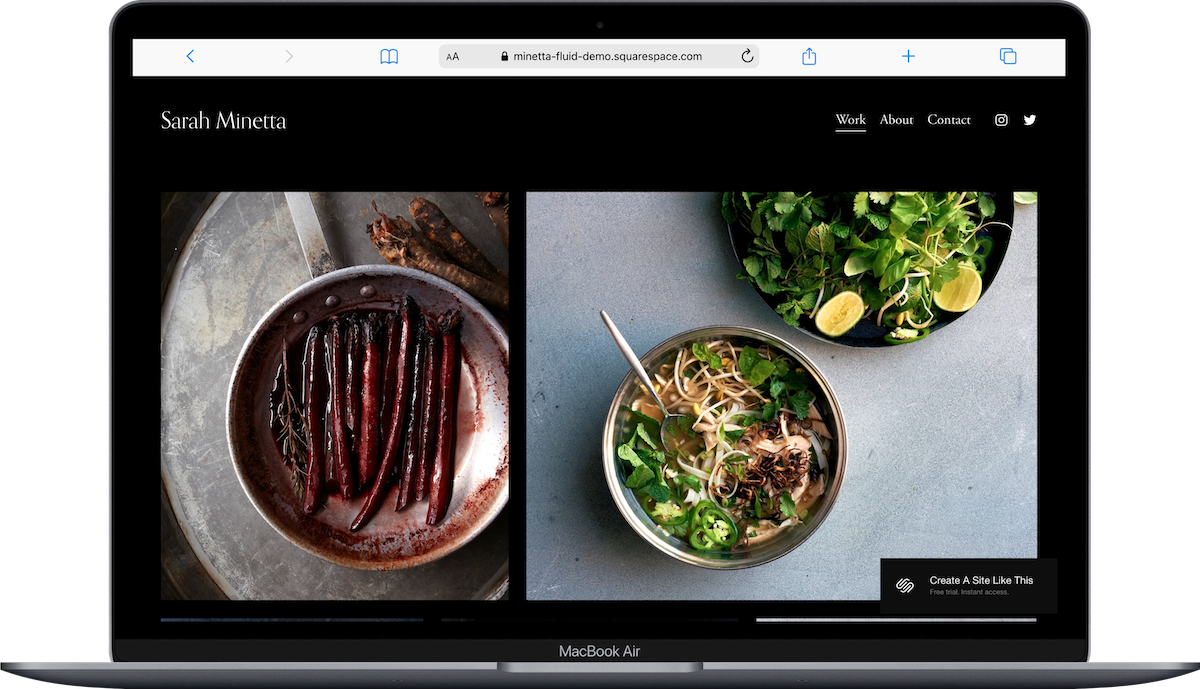
5. Minetta Squarespace Template
Best for: Food photography portfolios with a blog component
Minetta is specifically categorized by Squarespace as a food photographer & stylist template. This one doesn’t actually have a blog in the template, but you could easily add one if you like the vibe of this template. The design prioritizes visual presentation with a gallery-forward approach that works well for food bloggers who want their site to feel more like a portfolio.
This one is particularly good if you do photography work alongside your food blog (freelance food photography, cookbook collaborations, brand partnerships). The blog section is standard, but the portfolio and gallery layouts are where Minetta stands out.
6. Hester Squarespace Template
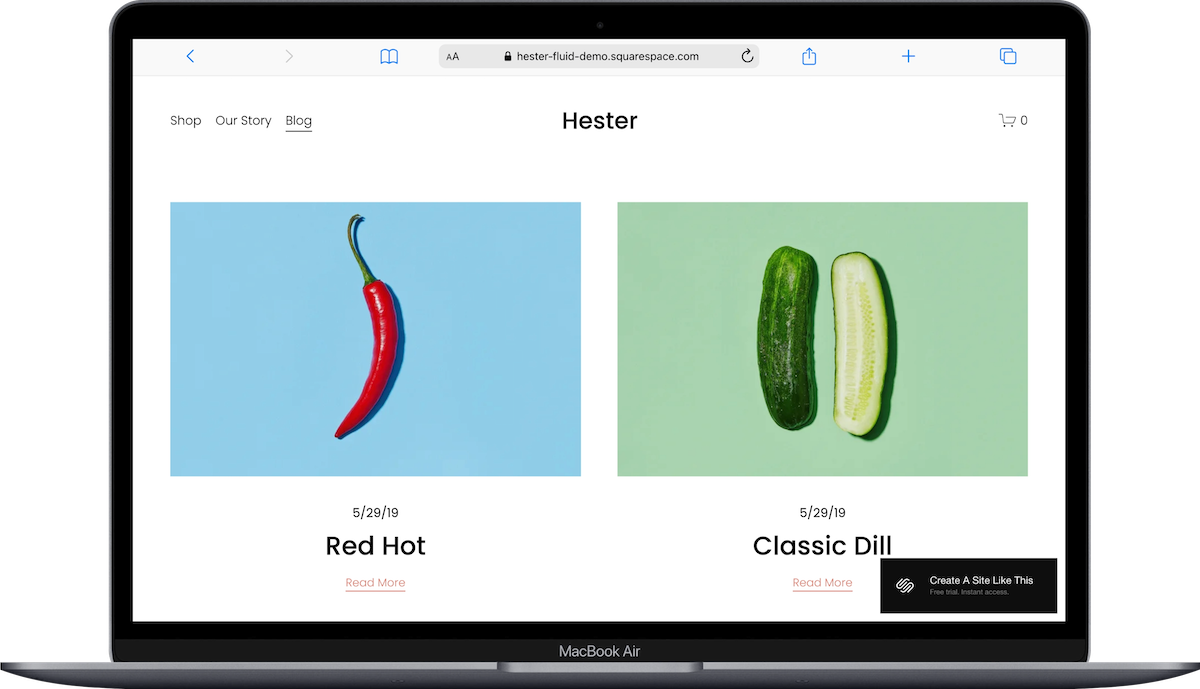
Best for: Food bloggers who also sell products
Hester adds something the other templates on this list don't emphasize: ecommerce. If you're a food blogger who also sells cookbooks, spice blends, merch, kitchen tools, or digital recipe collections, Hester gives you a clean shop section alongside your blog. It’s a little outdated, to be honest, but the simplicity can be a good starting point if you want something simple.
The food-oriented design means the shop pages look like they belong on a food site (not a generic store tacked onto a blog). The blog layout is straightforward and readable, though not as visually dynamic as Brower's masonry grid. It's a trade-off; you get the commerce integration in exchange for a slightly simpler blog presentation.
7. Loam Squarespace Template
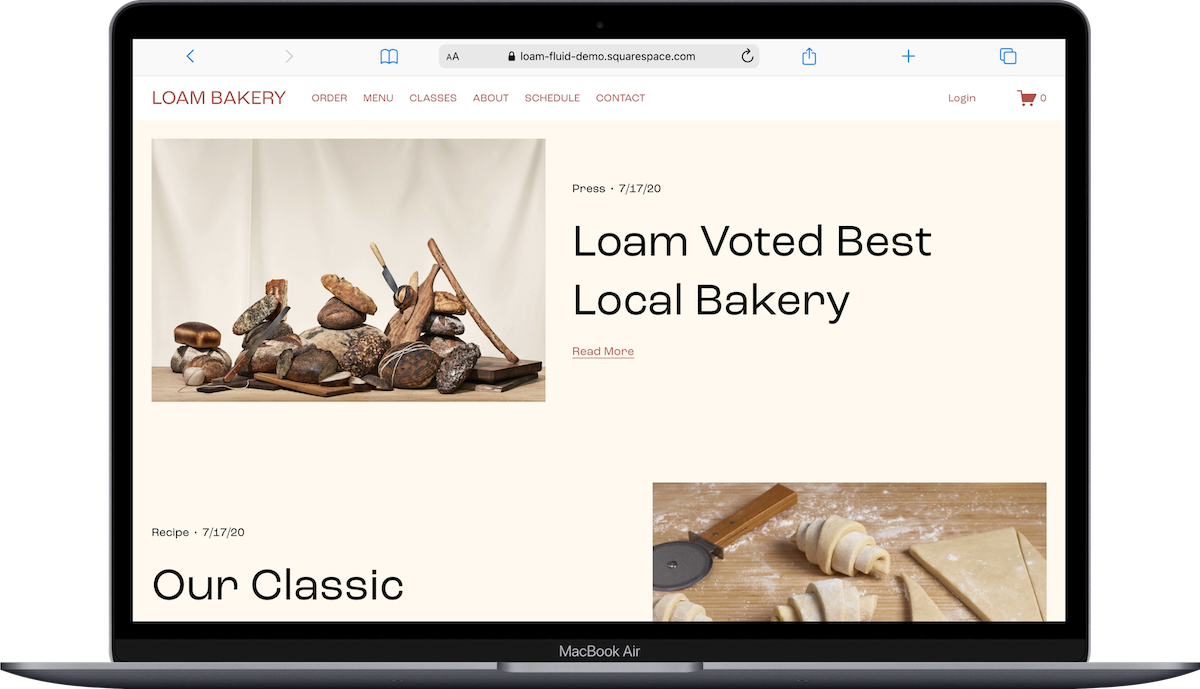
Best for: Warm, artisanal food blog aesthetic
Loam is technically categorized for bakeries and cafes, but its warm, textured aesthetic makes it surprisingly adaptable for food blogging. The design feels artisanal and handcrafted; perfect if your food blog leans toward sourdough, fermentation, farm-to-table cooking, or anything with that earthy, maker-focused vibe.
The homepage layout gives you room to showcase featured content, and the overall typography and spacing handle long-form posts well. You'll need to customize it away from the cafe/shop orientation, but the bones are excellent for the right kind of food blog.
The Recipe Card Situation
So let me be upfront about this:
Squarespace does NOT have built-in recipe cards. And it does not generate recipe schema markup; that's the structured data that tells Google "this is a recipe" and enables those rich recipe snippets in search results with star ratings, cook times, and ingredient lists.
If recipe SEO is a core part of your strategy; if you want your chocolate chip cookie recipe to show up in Google with that formatted recipe card; you'll need a third-party plugin. The main option in 2026 is Recipes Generator, which adds recipe cards with schema markup, star ratings, and printable cards to your Squarespace posts.
This is worth knowing because it's one area where WordPress has a clear advantage for food bloggers. WordPress has multiple well-established recipe card plugins (WP Recipe Maker, Tasty Recipes, etc.) with years of recipe SEO optimization built in. On Squarespace, you're adding this functionality after the fact.
Does this mean Squarespace is wrong for food blogs? Not at all, for a lot of people. It depends on your priorities. If recipe SEO rich snippets are your primary growth strategy, investigate the plugin options carefully before committing. If your food blog is more brand-driven, photography-focused, or content-diverse (not purely a recipe index), Squarespace's design quality and simplicity can outweigh the recipe card limitation.
Just go in knowing the landscape.
When to Consider a Premium Template Instead
Every template on this list is a Squarespace built-in, which means it's free and available on all plans. But built-in templates are, by definition, the same starting point thousands of other people are using. (There are a lot of generic-looking food blogs out there.)
If you want something more distinctive; a layout specifically designed for food blogging workflows, custom typography that feels unique to your brand, or section designs you won't see on every other Squarespace food site; third-party template shops are worth exploring.
A few shops that make quality Squarespace 7.1 templates:
Big Cat Creative has templates with strong blog layouts
Kseniia Design offers polished designs with food-friendly aesthetics
Aplet Studio focuses on beautiful, high-converting templates
These typically run between $200 - $450+ and give you a more custom starting point. Whether that's worth it depends on how much brand differentiation matters to you versus working with what Squarespace provides for free.
And if you're still figuring out which template direction is right, my guide on how to choose a Squarespace template walks through the full decision process.
Frequently Asked Questions
Is Squarespace good for food blogs?
Squarespace is a solid option for food blogs that prioritize design quality, brand presentation, and ease of use. Where it falls short compared to WordPress is in native recipe SEO features; Squarespace lacks built-in recipe cards and schema markup, so you'll need a third-party plugin if recipe rich snippets are central to your search strategy. For food bloggers focused on photography, storytelling, and brand-building, Squarespace works well.
What is the best Squarespace template for a food blog?
Brower is the best overall Squarespace template for food blogs in 2026. Its masonry blog index layout showcases food photography effectively, and the single-post design handles long recipe content with clean readability. Stanton is the runner-up for bloggers who want a more editorial, magazine-style feel.
Can you add recipe cards to Squarespace?
Squarespace does not include built-in recipe cards, but you can add them through a third-party plugin called Recipes Generator. This plugin adds formatted recipe cards with ingredients, instructions, cook times, star ratings, and printable layouts to your posts. It also generates the recipe schema markup (JSON-LD) that Google needs to display rich recipe snippets in search results.
Is WordPress or Squarespace better for food blogging?
WordPress has a clear advantage for food bloggers who rely heavily on recipe SEO, thanks to established plugins like WP Recipe Maker and Tasty Recipes with deep recipe schema support. Squarespace has the advantage in design quality, simplicity, and built-in hosting and security. If your food blog is recipe-index-focused and search traffic is your primary growth channel, WordPress gives you more SEO tooling; if your food blog is brand-and-photography-driven, Squarespace is easier to maintain and often looks better out of the box.
How do I start a food blog on Squarespace?
Start with a free 14-day Squarespace trial, choose a food-friendly template like Brower or Stanton, and set up your blog section with categories for your content types (recipes, reviews, stories, etc.). The Basic plan at $16/month covers everything a new food blog needs. If recipe cards are part of your plan, add the Recipes Generator plugin once your site structure is in place.

