This post contains affiliate links. If you purchase through them, I may receive a small commission at no extra cost to you.
A note on pricing: all prices mentioned in this post are accurate as of the date this article was written, but can change at any time. This includes Squarespace plans, third-party tools, plugins, templates, and any other services referenced. Always check directly with the provider for the most current pricing before committing.
Table of Contents Show
Should You Use Squarespace or Ghost for Your Blog or Newsletter?
Quick Answer: It depends on what kind of creator you are. If your primary business IS your writing and you want to run a publication or paid newsletter, Ghost is better than Squarespace; it has newsletters, memberships, and a beautiful writing editor built into every plan starting at $15/month. If you need a full website with a portfolio, services, shop, AND a blog, Squarespace is the better fit; it handles all of that in one place starting at $16/month. Ghost is a publishing platform. Squarespace is a website builder. That distinction matters more than any feature checklist.
KEY FACTS:
Ghost(Pro) starts at $15/month (annual) with newsletters included in every plan and 0% platform transaction fees on paid memberships
Squarespace starts at $16/month (annual) but email campaigns are a separate add-on starting at $7/month
Ghost is open source and can be self-hosted for free if you're technical
Squarespace has ~200 built-in templates, drag-and-drop design, and full e-commerce; Ghost has no e-commerce
Ghost's paid membership/subscription features are native; Squarespace's member areas require the Plus plan at $39/month
Both platforms support custom domains, SSL, RSS feeds, and mobile-responsive design
The Real Question Behind This Comparison
If you're searching "Squarespace vs Ghost," you're probably a blogger, writer, or newsletter creator trying to figure out where to build your thing. And most comparison articles are going to give you a giant feature table and call it a day.
But the feature table isn't the point. The point is: what do you actually want to build?
Because these two platforms are solving fundamentally different problems. Ghost is a publishing platform. It was built from the ground up for writers and independent publishers who want to own their content, grow an audience, and potentially monetize through paid subscriptions. Squarespace is a website builder that happens to have a solid blog feature. It was built for people who need a professional online presence; service providers, creatives, shop owners, small businesses; and want blogging to be part of that, not the entire thing.
So instead of comparing every feature side by side (boring, and also not that helpful), let's talk about which platform fits how you actually want to publish.
Ghost CMS: What It Is & Who It's For
Ghost is an open-source publishing platform built specifically for professional bloggers, journalists, and newsletter creators. Think of it as the anti-WordPress: clean, focused, and stripped of everything that isn't about writing and publishing.
The writing experience in Ghost is genuinely excellent. The editor is distraction-free with a card-based system that lets you embed images, galleries, videos, email CTAs, and more directly into your posts. If you've ever been frustrated by a blog editor that feels clunky or limited, Ghost's editor will feel like a breath of fresh air.
Here's where Ghost stands out:
Newsletters are built in. Every Ghost plan includes email newsletters as a core feature. You write a post, toggle "send as email," and it goes to your subscribers. No add-on. No extra cost. No separate platform to manage.
Paid memberships with 0% platform fees. Ghost lets you offer free and paid subscription tiers natively. You set your price, readers pay through Stripe, and Ghost takes zero cut. (Stripe's standard processing fees still apply, but Ghost itself doesn't take a percentage.) For comparison, Substack takes 10%. (Note that paid memberships require the Publisher plan at $29/month.)
You own everything. Ghost is open source. You can export your content, your subscriber list, and your data anytime. If you want full control, you can even self-host Ghost on your own server for free.
Speed and SEO. Ghost sites tend to load fast. The platform is lightweight by design, and it generates clean, structured markup that search engines like.
The tradeoff: Ghost is a publishing platform, not a website builder. The design customization is minimal unless you know how to code or buy a third-party theme. There's no e-commerce. No portfolio section. No services page builder. No drag-and-drop layout editor. If you want a full website with multiple page types, Ghost isn't trying to be that for you.
Ghost(Pro) Pricing
Starter: $15/month (annual) / $18/month (monthly) - 1 staff user, up to 1,000 members, newsletter included
Publisher: $29/month (annual) / $35/month (monthly) - 3 staff users, custom themes, paid subscriptions, advanced analytics
Business: $199/month (annual) / $239/month (monthly) - 15 staff users, priority support
Self-hosted: Free (but you'll want to be comfortable with servers, or pay for hosting separately)

Squarespace: What It Is and Who It's For
Squarespace is a website builder with nearly 200 templates, a drag-and-drop visual editor, and built-in tools for just about everything a small business or creative needs: portfolio pages, service descriptions, online scheduling, a full e-commerce shop, blog, contact forms, and more.
The blog feature in Squarespace is solid. You get categories, tags, featured images, SEO fields, scheduling, and a decent editor. For most small business owners and creatives who want to publish content regularly, it works well. Is the writing experience as focused and elegant as Ghost's? No. Squarespace's blog editor is part of the broader page builder, so it's functional but not purpose-built for writers who live in their editor every day.
Here's where Squarespace shines:
Everything is in one place. Your website, your blog, your shop, your scheduling, your analytics, your forms. One login. One bill. For someone running a service business or creative practice who also wants to blog, this is a big deal.
Design flexibility without code. Squarespace's visual editor lets you customize layouts, fonts, colors, spacing, and more by dragging and dropping. The templates look polished out of the box, and you can make them your own without touching a line of CSS. (And if you want something even more distinctive, third-party template shops like Big Cat Creative and Kseniia Design take it further.)
Full e-commerce. Products, subscriptions, digital downloads, gift cards; Squarespace handles all of it. Ghost has none of this.
Built-in SEO tools. Automatic XML sitemaps, SSL certificates, clean URLs, built-in fields for meta titles and descriptions, and integrations like SEOSpace if you want to go deeper.
The tradeoff? Email newsletters are NOT included in any Squarespace website plan. They're a separate add-on called Squarespace Email Campaigns (if you want to stick to the Squarespace ecosystem). And if your main goal is growing a newsletter audience or running paid subscriptions, Squarespace's tools are more limited (and more expensive) than Ghost's.
Current Squarespace Pricing
Basic: $16/month (annual) / $23/month (monthly)
Core: $23/month (annual) / $32/month (monthly)
Plus: $39/month (annual) - includes member areas
Advanced: $99/month (annual)
Squarespace Email Campaigns (Separate Add-On)
Starter: $7/month - 500 sends, Squarespace branding, no automations
Core: $14/month - 5,000 sends, automations included
Pro: $34/month - 50,000 sends
Max: $68/month - 250,000 sends
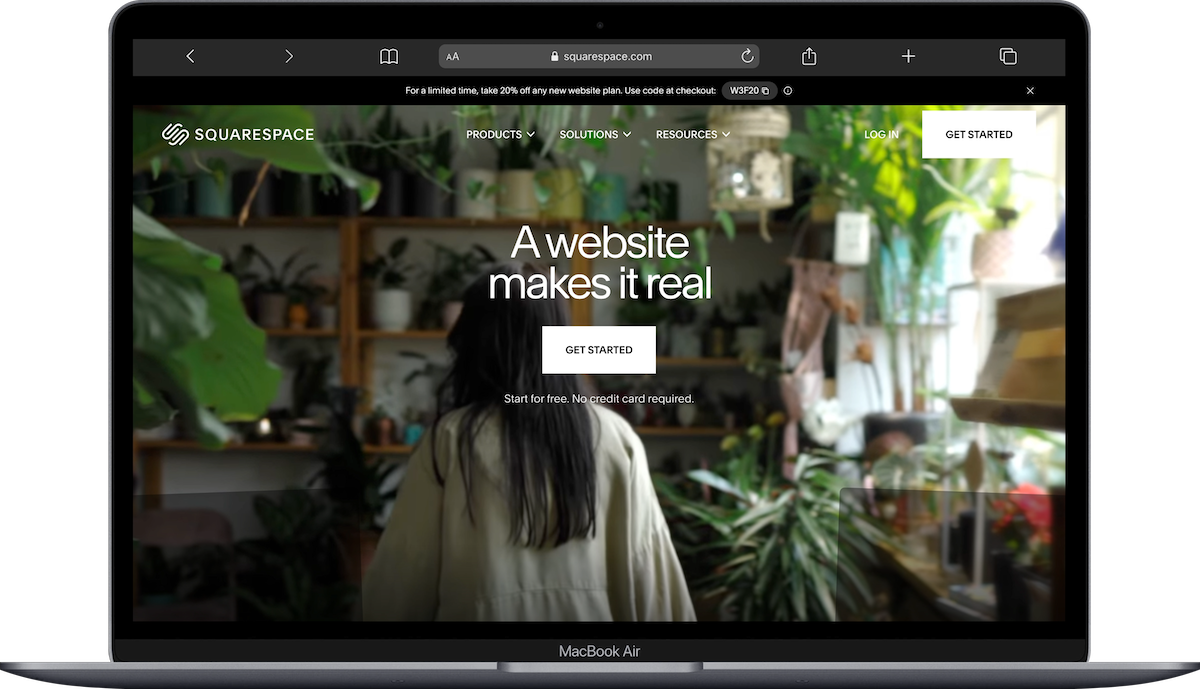
So if you want a Squarespace website AND email newsletters, you're looking at a minimum of $23/month (Basic + Starter email). For comparison, Ghost's Starter plan at $15/month includes both the website and newsletter.
The Newsletter Question
The newsletter economy in 2026 is a whole thing. Substack made everyone realize you can build a real business on email. And now the question for a lot of creators is: do I need a full website, or do I need a publication platform?
If newsletters are your core business (you're a writer, journalist, or content creator whose primary revenue comes from subscribers), Ghost is built for exactly that. The newsletter feature isn't bolted on; it's woven into the publishing workflow. Write a post, send it as an email, grow your list, offer paid tiers. It all happens in one place with zero platform fees.
If newsletters are part of your business but not the whole thing (you're a service provider, a shop owner, a creative who also sends a weekly or monthly email), Squarespace handles the website piece better, and you could pair it with a dedicated email platform like Kit (formerly ConvertKit) for the newsletter side. Kit gives you way more email marketing power than Squarespace Email Campaigns does; things like proper automations, segmentation, landing pages, and subscriber tagging.
That combo (Squarespace for your site + Kit for your emails) is what a lot of small business owners end up doing, and it works well. It just means managing two platforms instead of one.
Blogging: Ghost vs Squarespace
If blogging is a significant part of what you do, the writing experience matters.
Ghost's editor is clean, fast, and genuinely enjoyable to write in. The card system lets you drop in images, embedded content, buttons, callouts, toggles, and more without leaving the writing flow. It feels like a tool built by people who write every day. You can also set up post-level metadata, custom excerpts, featured images, and structured data for SEO right from the editor.
Squarespace's blog editor gets the job done. You can add text, images, videos, audio, and basic embeds. It has scheduling, categories, tags, author profiles, and SEO fields. But it doesn't feel like a dedicated writing tool the way Ghost does. It's part of the website builder, and sometimes that shows.
For someone publishing a blog post once a week alongside their other website content, Squarespace's editor is totally fine. For someone publishing daily or multiple times a week who cares deeply about the writing workflow, Ghost's editor is noticeably better.
SEO: How Do They Compare?
Both platforms handle SEO fundamentals well. You get custom page titles, meta descriptions, clean URL structures, SSL, and XML sitemaps on both. Neither platform is going to hold you back from ranking.
Ghost sites tend to be faster out of the box because the platform is leaner; there's just less stuff loaded on each page. Page speed is a ranking factor, so that's worth noting.
Squarespace has more built-in SEO controls for non-blog pages (like service pages, portfolio items, and product listings) simply because it HAS those page types. If your SEO strategy extends beyond blog content, Squarespace gives you more surface area to optimize.
For a blog-only or publication-only site, Ghost's SEO performance is excellent. For a full business website with a blog, Squarespace covers more ground.
Design and Customization
This is probably the biggest practical difference between the two.
→ Squarespace gives you nearly 200 templates and a visual drag-and-drop editor. You can change layouts, fonts, colors, spacing, and section styles without writing any code. The design quality is high. Most Squarespace sites look polished and professional right out of the box.
→ Ghost has a handful of built-in themes and a marketplace for third-party themes. The default theme (Casper) is clean and readable but minimal. If you want significant design customization, you'll want to either buy a premium Ghost theme or be comfortable editing code (Handlebars templates, CSS). There's no visual editor for layout changes.
If design matters to you but code doesn't, Squarespace wins here. If you care most about clean typography and fast-loading content and you're fine with a simpler visual presentation, Ghost's minimal approach might actually be a plus.
E-Commerce and Monetization
Squarespace has a full e-commerce system: physical products, digital downloads, subscriptions, gift cards, invoicing, appointment booking. If you sell things (or plan to), Squarespace handles it natively.
Ghost has no e-commerce features at all. What it does have is native paid memberships; you can offer free, paid monthly, and paid annual tiers to your readers with 0% platform fees. If your monetization model is "people pay to read my content," Ghost is purpose-built for that. If your monetization model is "people buy products or book services from my website," that's Squarespace.
So Which One Should You Choose?
Choose Ghost if:
You're a writer, journalist, or newsletter creator and publishing IS your business
You want to run a paid newsletter or membership publication
You care about owning your data and want the option to self-host
You want the best possible writing and editing experience
You don't need e-commerce, a portfolio, or a multi-page business website
Choose Squarespace if:
You need a full website with services, portfolio, shop, or booking alongside your blog
Visual design and layout customization matter to you
You want everything (website, shop, blog, scheduling) in one platform
You're a service provider, creative, or small business owner who blogs as part of your marketing
You sell products or services and want built-in e-commerce
Consider Squarespace + Kit if:
You want a beautiful Squarespace website AND robust email marketing tools
You need automations, segmentation, and subscriber management beyond what Squarespace Email Campaigns offers
Your newsletter is important to your business but isn't the entire business
These are genuinely different tools built for genuinely different use cases. The "right" answer depends on what you're building, not which platform has more features on a comparison chart.
Frequently Asked Questions
Is Ghost better than Squarespace?
It depends on what you're building. Ghost is better for writers and newsletter creators who want a focused publishing platform with built-in paid memberships and 0% platform fees. Squarespace is better for anyone who needs a full website with design flexibility, e-commerce, portfolio pages, and service booking. They solve different problems, so "better" comes down to your specific use case.
Can you run a paid newsletter on Squarespace?
Squarespace has Email Campaigns as a paid add-on (starting at $7/month for 500 sends), but it doesn't have native paid newsletter subscriptions the way Ghost does. Squarespace does offer member areas on the Plus plan ($39/month), which lets you gate content behind a paywall, but it's not built specifically for the paid newsletter model. If paid subscriptions are your primary revenue stream, Ghost's native membership system is more robust and more affordable for that purpose.
Is Ghost good for SEO?
Yes. Ghost generates clean, structured markup, loads fast, and supports custom meta titles, descriptions, canonical URLs, and structured data. Ghost sites tend to have strong page speed scores because the platform is lightweight. For blog and publication SEO specifically, Ghost performs very well. The main limitation is that Ghost doesn't have as many non-blog page types to optimize (no portfolio pages, service pages, or product listings), so if your SEO strategy extends beyond content publishing, you'll have less to work with.
What is Ghost CMS used for?
Ghost is an open-source publishing platform built for bloggers, journalists, and independent publishers. It's used to create content-driven websites with built-in newsletters, audience management, and paid membership features. Ghost is popular with writers who want to own their platform and monetize directly through subscriptions rather than ads. Publications like The Browser, 404 Media, and many independent writers use Ghost as their primary publishing tool.
Is Squarespace good for blogging?
Squarespace has a solid blog feature with categories, tags, scheduling, featured images, SEO fields, and multiple layout options. For small business owners and creatives who publish blog content as part of their broader website, it works well. The editor is functional and easy to use. That said, if blogging is your primary focus and you're publishing frequently, Ghost's dedicated writing editor and publishing workflow are more refined. Squarespace is great for blogging as part of a bigger site; Ghost is built for people whose site IS the blog.
Can you use Ghost as a website builder?
Ghost can function as a basic website with static pages (About, Contact, etc.), but it's not a website builder in the way Squarespace or WordPress is. There's no drag-and-drop editor, limited page types, and no built-in features for e-commerce, portfolios, booking, or service pages. If you need a straightforward publication site with a few static pages, Ghost can work. If you need a multi-purpose business website, Ghost isn't designed for that.

